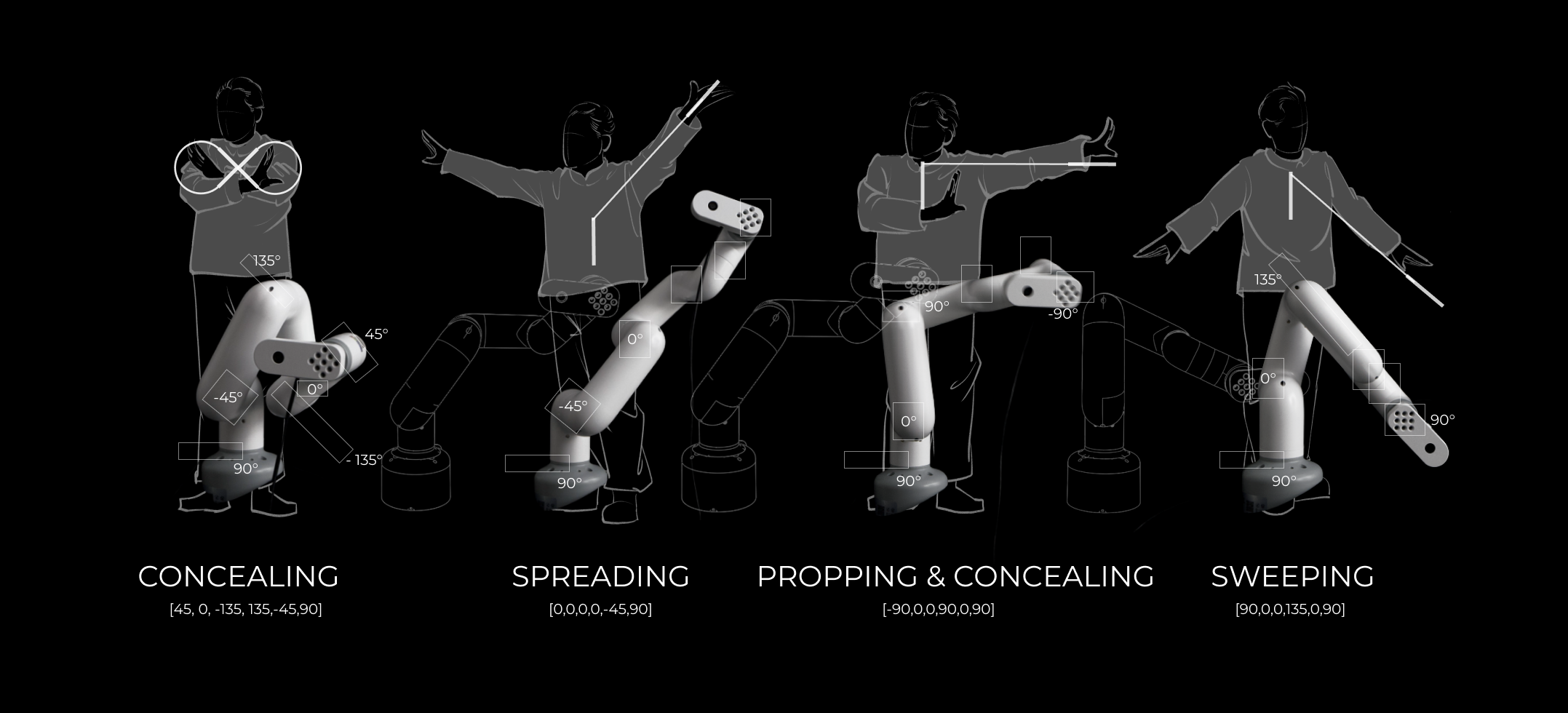
In this work, we introduce Ropera, a non-humanoid robotic arm performer designed to explore how structured choreography and notation systems can expand the expressive potential of robotic performance. Moving beyond the anthropomorphic paradigm, Ropera uses motion abstraction, geometry-based pose design, and light painting to convey the unique aesthetic possibilities of non-humanoid robots. By integrating principles from Chinese Kunqu Opera, we establish a model for adapting codified human movement into joint space control for six-axis robotic arms, highlighting the synergy between cultural performance traditions and robotic motion design.
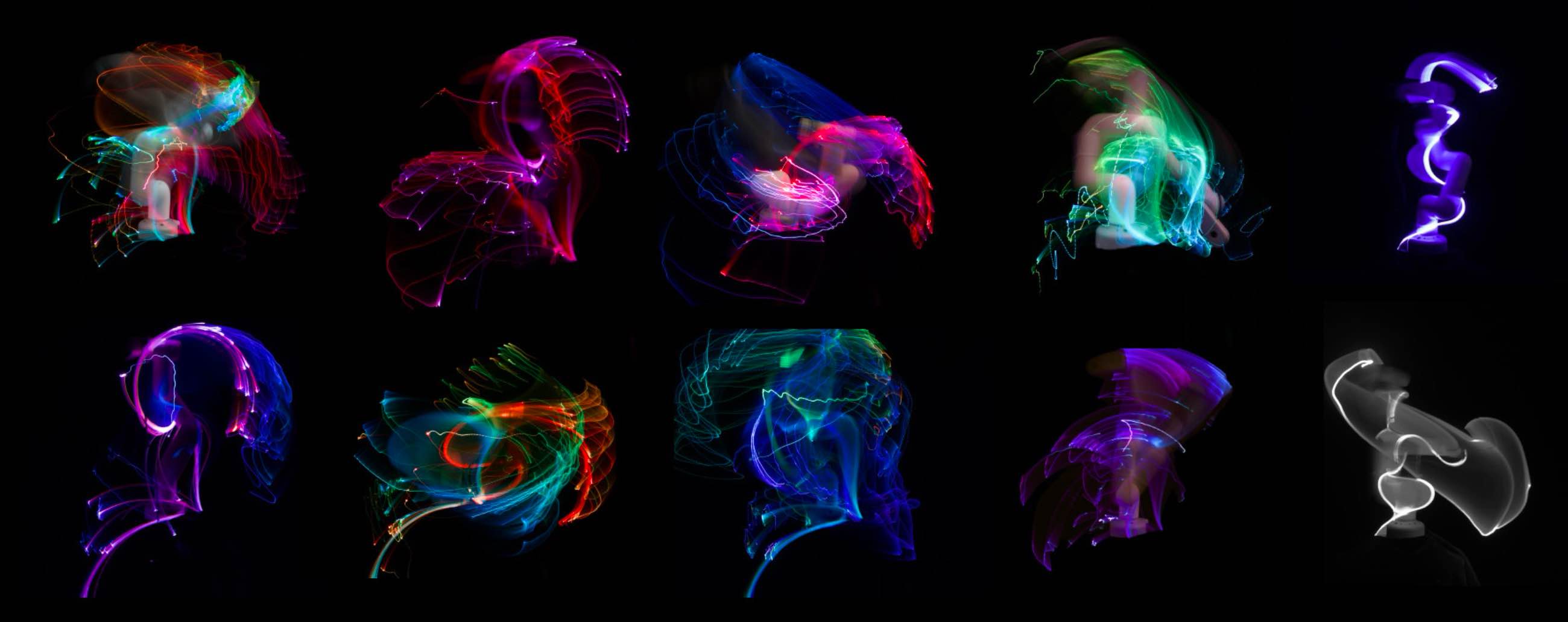
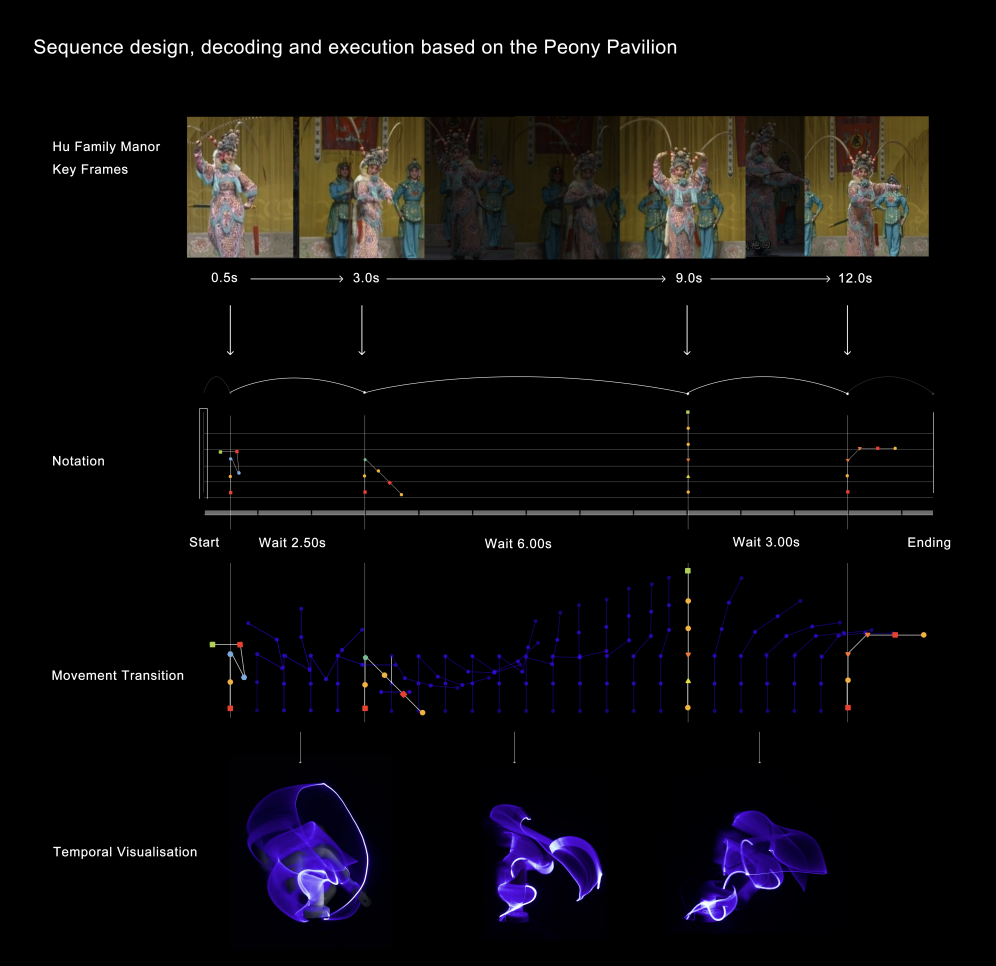
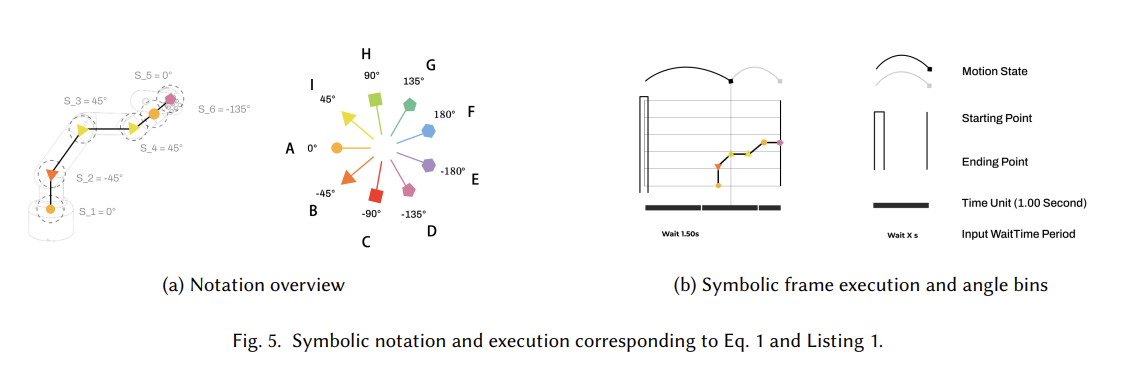
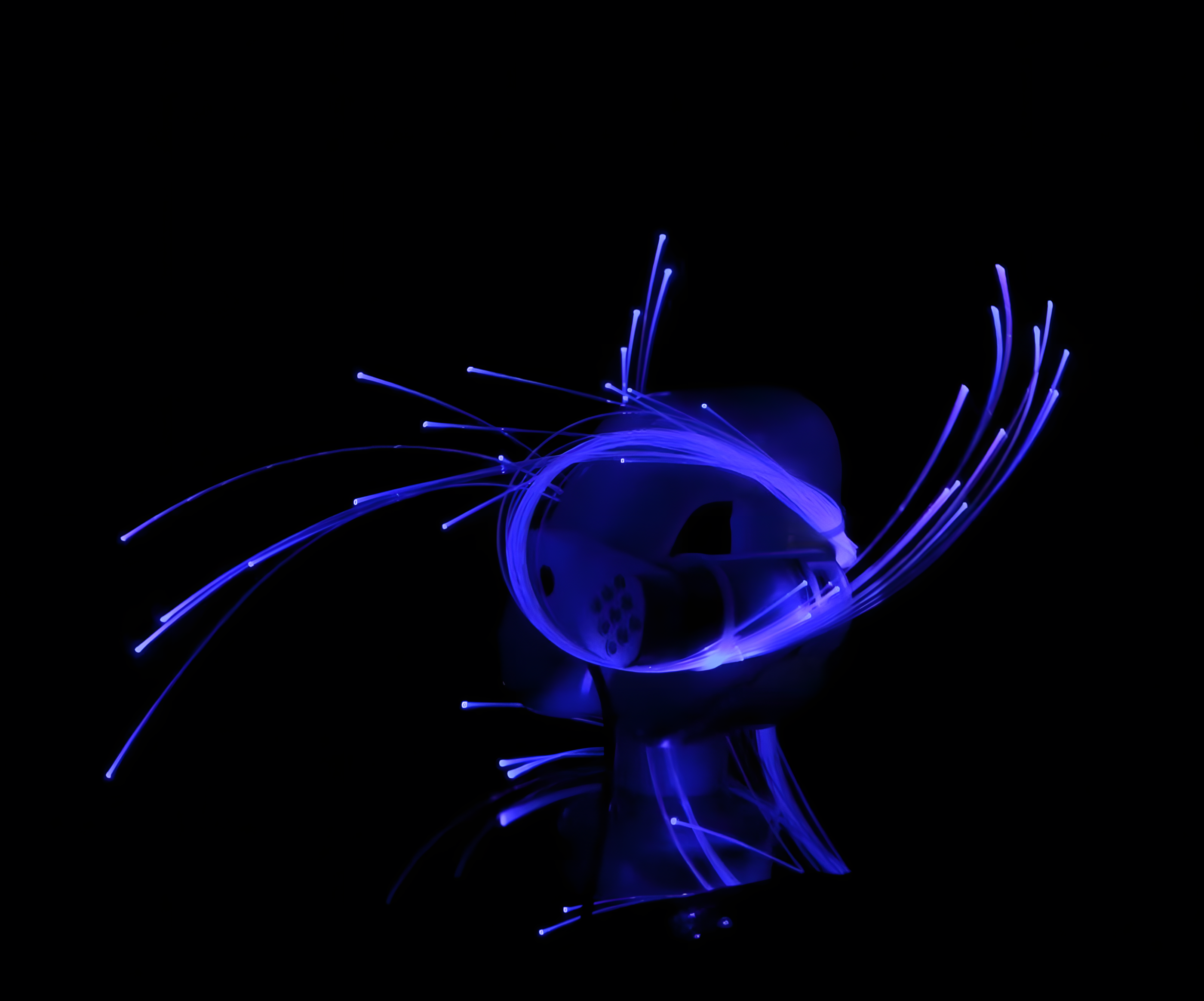
Our research demonstrates a notation-based approach that bridges pose definition, programming methodology, and lighting visualization. We developed a new movement notation tailored to the robotic arm’s constraints, enabling systematic mapping of Kunqu’s gestural vocabulary to servo angles and transitions. Through iterative testing, we refined strategies for timing, velocity control, and pause integration to capture stylistic nuances such as the fluid hand gestures and rhythmic accents of The Peony Pavilion. The resulting robotic performance is documented and visualized with fiber-optic sleeves that accentuate spatio-temporal aspects, underlining the arm’s capacity for artistic expression.
By positioning Ropera as a starting point, we aim to inspire a broader discourse on non-humanoid robot performance. While humanoid robots have been extensively studied in stage productions, our work focuses on the novel design considerations required to unlock non-humanoid robots’ expressive capabilities—from choreography notation to multi-robot synchronization. Ultimately, this research contends that non-anthropomorphic forms can foster new avenues of artistic creativity, contributing valuable methodologies and insights to the intersection of robotics, performance, and cultural heritage.
在这项工作中,我们介绍了 Ropera——一位非人形机械臂表演者,用以探索结构化的编舞与记谱系统如何拓展机器人表演的表现潜力。Ropera 跳出拟人化的范式,运用动作抽象、基于几何的姿态设计与光绘,传达非人形机器人独特的审美可能。通过融入中国昆曲的程式原则,我们建立了一个将程式化的人体动作转化为六轴机械臂关节空间控制的模型,展现文化表演传统与机器人动作设计之间的协同。
我们的研究展示了一种基于记谱的方法,将姿态定义、编程方法与灯光可视化连接起来。我们针对机械臂的约束开发了一套新的动作记谱法,能够把昆曲的身段语汇系统地映射为舵机角度与过渡。通过反复测试,我们改进了节奏、速度控制与停顿的处理策略,以捕捉《牡丹亭》中流畅的手部动作与节奏重音等风格细节。最终的机器人表演通过光纤袖套进行记录与可视化,凸显其时空特征,展现机械臂的艺术表现力。
我们以 Ropera 为起点,希望引发关于非人形机器人表演的更广泛讨论。人形机器人在舞台作品中已有大量研究,而我们的工作关注的是释放非人形机器人表现力所需的全新设计考量——从编舞记谱到多机器人同步。最终,这项研究认为,非拟人化的形态能够开辟艺术创作的新途径,为机器人学、表演与文化遗产的交叉领域贡献有价值的方法与洞见。