Waste polyurethane is hard and costly to recycle because of its composite nature, which limits how the material can be reused.
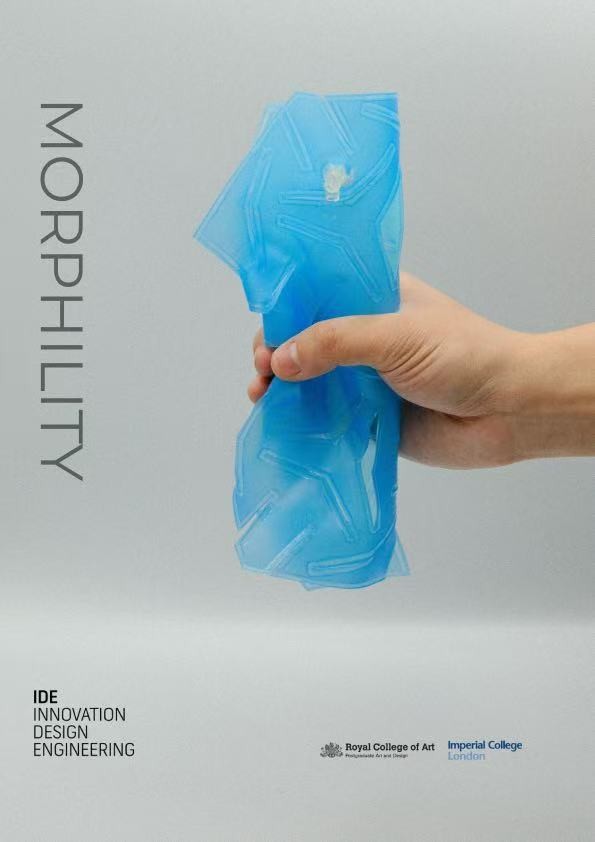
Morphility uses recycled thermoplastic polyurethane (TPU) as a single laminated material. Self-supporting inflatable structures are made without any chemical treatment or adhesive, so the products can be fully recycled through physical processing alone, with no loss in material performance.
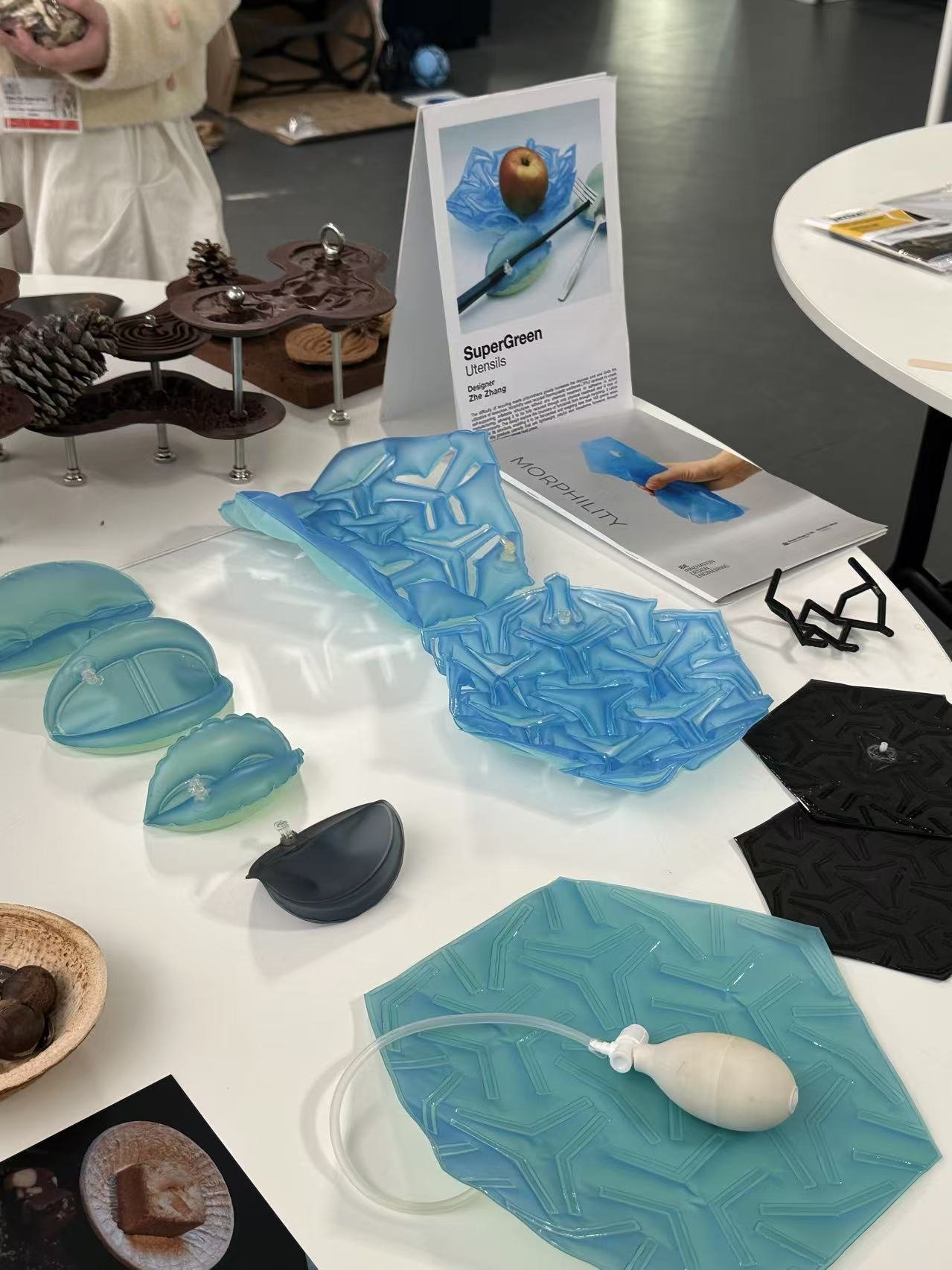
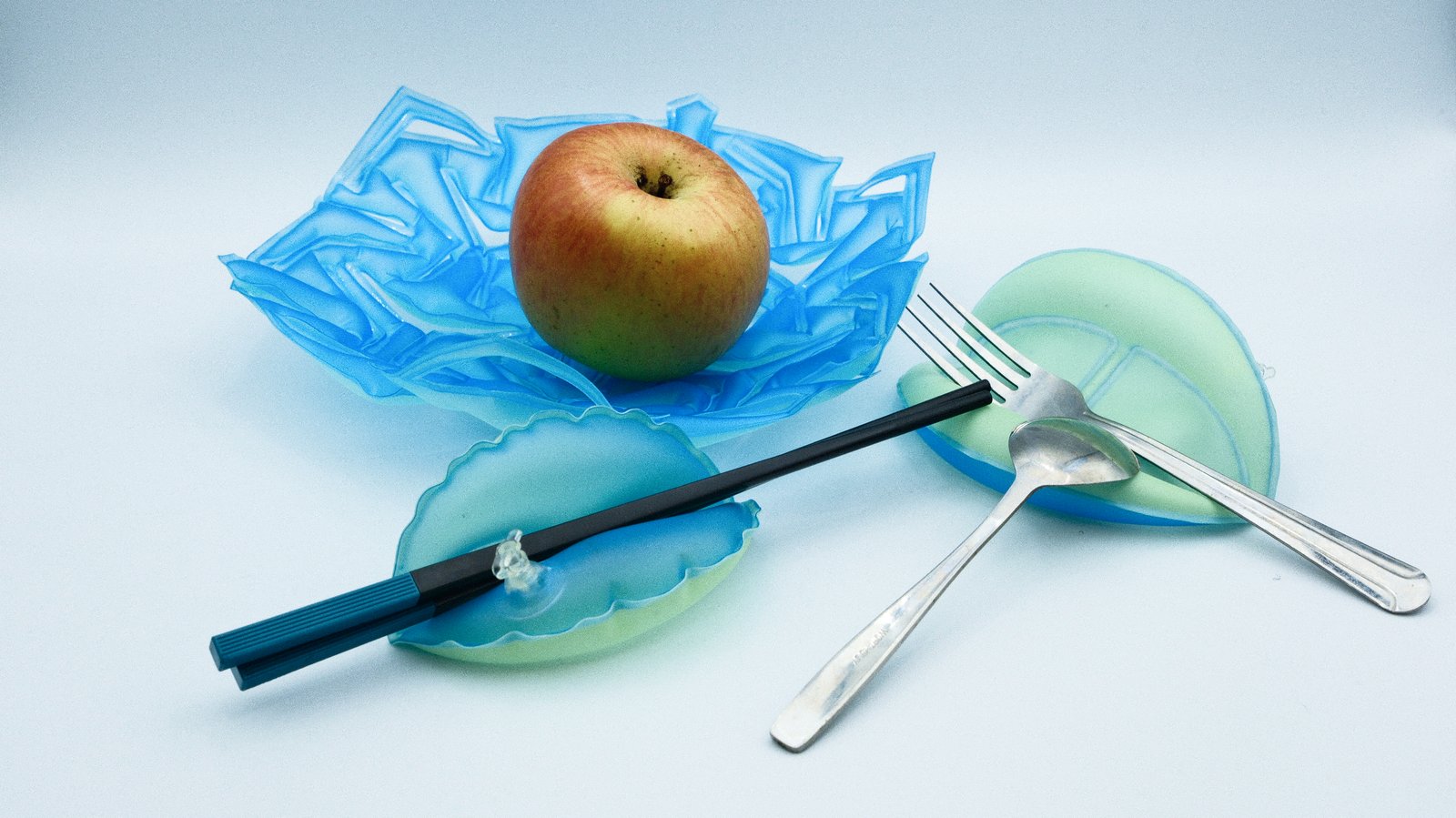
The design explores the boundaries of functional form through shape-shifting: air holds the structure up, and once deflated the products lie flat for storage, each weighing under 100 g. The utensils are light and playful, and a simple heat-pressing process lets them change both function and form.
Flat-formed pneumatic structures are a recurring topic in HCI and soft robotics, often linked to origami techniques and the growing curves of parametric design.
In this project I started from a triangular origami structure and explored how neighbouring triangles interfere with each other as they inflate. Three main chambers of the hexagon act as structural support, while three secondary chambers increase the degree of bending; varying the thickness of the lower plastic layer constrains the direction of deformation, finally forming a fruit bowl.
废弃聚氨酯(Polyurethane)由于其复合特性,回收难度大、处理成本高,并限制了资源的利用。
Morphility 利用回收的热塑性聚氨酯(TPU)作为单一层压材料,在实际制造过程中无需任何化学处理或粘合剂,即可制造出自支撑的充气结构,从而使产品仅通过物理处理就能实现完全回收,同时保持材料性能的零损失。
该设计通过形态变换探索功能形式的边界,借助空气维持结构,使产品在放气后能够平铺存放,且重量不足 100 克。我们生产的器具不仅轻便有趣,更通过简易的热压实现功能和形态的转变。
平面成型的气动结构是人机交互与软体机器人领域常研究的话题,通常与折纸技术以及参数化设计中的生长曲线(growing curve)有关。
在这个项目中,我从一种三角形折纸结构入手,探索了不同三角形之间的膨胀干涉:六边形的三个主气室作为结构支撑,三个副气室扩大弯曲程度,并通过改变下层塑料的厚度来限制形变方向,最终形成了一个水果碗。